 |
REPUBLIC OF IRELAND |
|
REPUBLIC OF IRELAND |
|
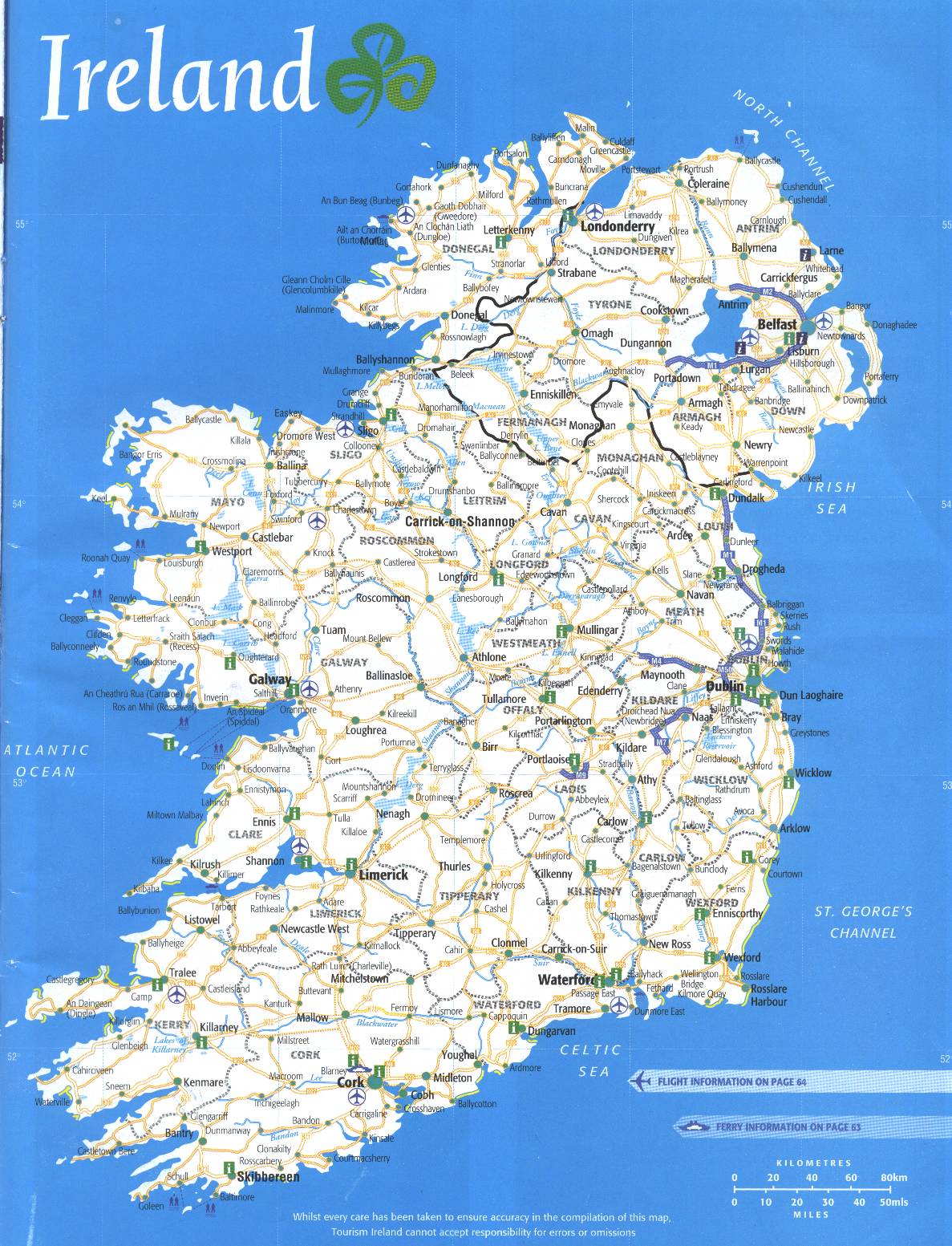
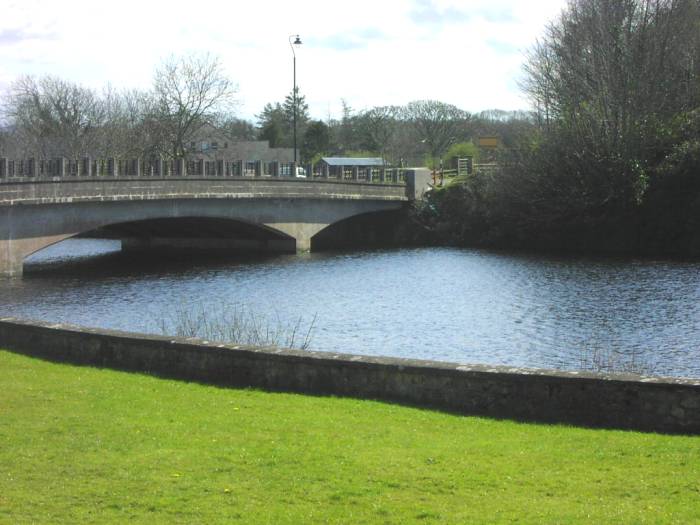
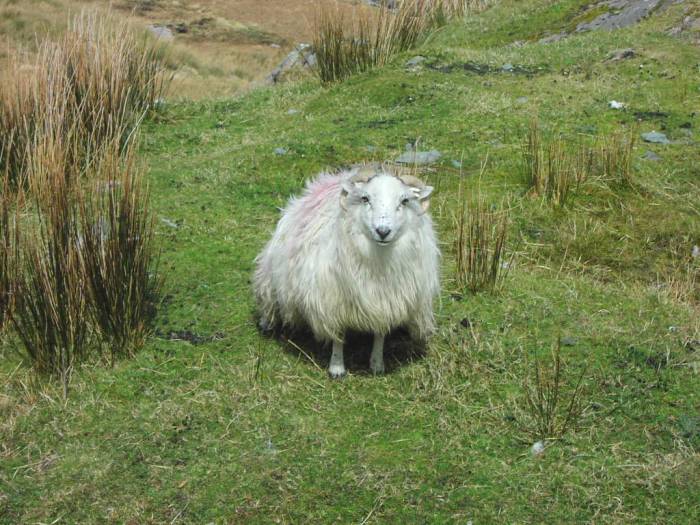
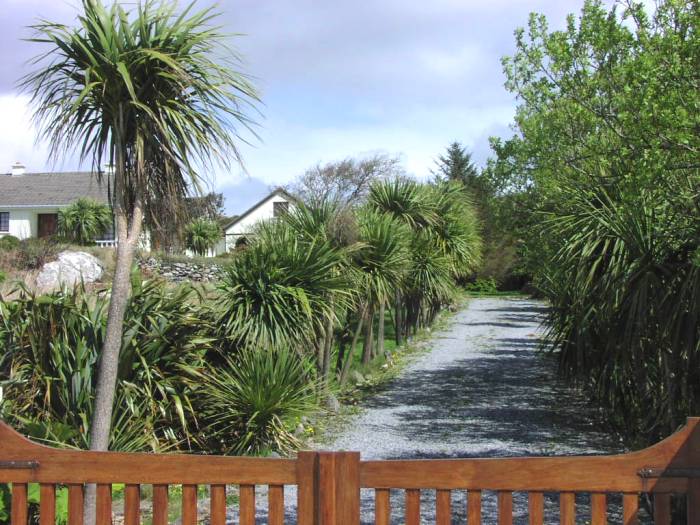
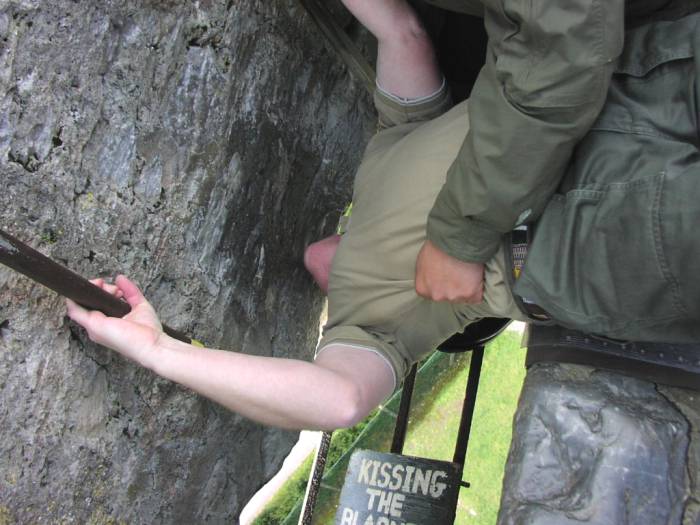
We crossed the River Erne to enter the Republic of Ireland. After crossing the Benbulben plateau we stopped in the town of Drumcliff, and at St. Columba's Church just outside town. We spent the night at Sligo. Arriving early enough gave us some time to visit the central area of town and visit the Immaculate Conception Church and walk along the River Sligo. The next morning our first stop was the village of Knock. Knock attracts pilgrims from all over the world since the townsfolk saw apparitions on a church wall. We then headed to Galway, the city of 12 tribes. Since every town has a castle, Galway had Dunguire Castle on Galway Bay. It dates from the 1500s. Next we drove by the Burren Hills with their natural radioactive limestone. On the way to Limerick we saw one of the most spectacular sites in Ireland. The 668 foot Cliffs of Moher. We spent some time hiking to the top and taking lots of pictures. Limerick, is the 3rd largest city in Ireland - population about 100,000. We stayed overnight at the 2-mile Hotel - seems you had to be 2 miles outside town to drink on Sundays, so lots of establishments just outside the 2 mile radius. The next day we saw some of the sites in Limerick and then we were off to Adare - a great town with thatched roof cottages. Nearby was one of the only 5-star resorts in Ireland - the Adare Manor. Traveling we saw lots of sheep, cows and horses. Seems this is diary country with mostly 30-40 acre family-owned farms. As we approached the Dingle Peninsula, we had about an hour of light rain. The edge of the peninsula is the most western point in Europe. We stopped in Dingle for lunch and wandered around the harbor with its many fishing boats. The peninsula road was only one-lane in many places. Some sites we saw were the Bee Hive Huts, the Inch Strand - a surfing and bathing beach with some great scenery and the offshore Blasket Islands on the 32 mile Slea Head Drive. We stayed for 2 nights in Killarney - our hotel was a short walk into the center of the old town. After a good night's rest we were off to Killorglin, got to walk on a peat bog, then on to join the 100-mile coastal road known as the "Ring of Kerry." It offers sparkling seascapes, mountains dotted with farmhouses, winding lanes with subtropical vegetation, and spectacular views of the Lakes of Killarney. We had lunch in the town of Cahersiveen on the Kerry Peninsula. Kenmare Bay was on the south side of the peninsula. We also stopped in Sneem with brightly painted houses and the river right in the middle of town. The next morning we visited Blarney Castle and its Stone of Eloquence - John even kissed the "Blarney Stone." After lunch we were off to Youghall where the movie Moby Dick was filmed in 1954. It's other claim-to-fame is the site where Sir Francis Drake planted the first potato field. The town's clock tower dates from 1777. We stopped at a viewing point overlooking Dungarvan Bay for pictures of the Irish Sea and south-east Ireland. In a nearby town we stopped at a private house known as the "Shell Cottage." The lady used shells to decorate the entire outside of her small home. She was married to a sea captain and the shell project kept her busy while he was gone. That night we stayed in the Majestic Hotel in Tramore. Our room overlooked the Irish Sea - very nice. The next morning we headed north to Enniscorthy with Ferns Castle remains and then on to Avoca in the Wicklow Mountains. A short distance away was the Meeting of the Waters where two rivers converged to form the River Avoca. For lunch and a little hiking, we stopped in Glendalough Park and Powerscourt Valley in the Wicklow Mountains. By that evening we were in Dublin, population 1.5 million. Our hotel, the Jurys Inn Custom House, was on the river and in the financial district. We spent 2 nights in Dublin. This gave us a chance to do our laundry. Interesting talking with the lady at the launderette. She immigrated from the Ukraine about 8 months ago, was working in Dublin to earn enough money so she could return home, pick up her son, and then immigrate to either America or Australia. She was in Dublin because it's easy to enter without proper papers. Her son was staying with her mother in the Ukraine (says no work in the Ukraine) and her husband was a looser. The next day was a full day to explore Dublin. Some highlights were: Oscar Wilde statue in the park, Merrian Square, National Gallery, Parliament House, Georgian Houses, St. Stephens Square, St. Patrick's Cathedral (Church of Ireland - Protestant). In the afternoon we went to Trinity College to see the Book of Kells (lavishly decorated copy of the 4 gospels produced by monks in the 9th century), visited Christ Church Cathedral (also Church of Ireland), walked past St. Anne's Church and went with the flow of crowds on O'Connell and Grafton Streets. Had some great food in a small restaurant on the main street. The next morning, April 21, we only had a short drive to the ferry boat dock to board the largest car carrying ferry in the world - the Ulysses. |